In advanced photonics and fiber optic systems, precision light control is essential. A fiber collimator is a foundational component that enables efficient transformation between fiber-guided light and free-space optical beams. Whether used in telecommunications, laser systems, or optical sensing, the optical fiber collimator plays a critical role in ensuring beam quality, alignment accuracy, and system performance.
As industries increasingly demand high-power laser transmission and ultra-precise optical control, the importance of high power fiber collimator solutions continues to grow. This guide provides a comprehensive understanding of fiber collimators—from working principles and design to applications and selection strategies.
A fiber collimator is an optical device that converts divergent light emitted from an optical fiber into a parallel (collimated) beam, or vice versa.
Optical fiber (single-mode, multimode, or PM fiber)
Collimating lens (GRIN, aspheric, or C-lens)
Precision alignment housing
When light exits a fiber, it naturally diverges. The collimator uses a lens positioned at the fiber’s focal point to transform this diverging beam into a low-divergence, parallel beam.
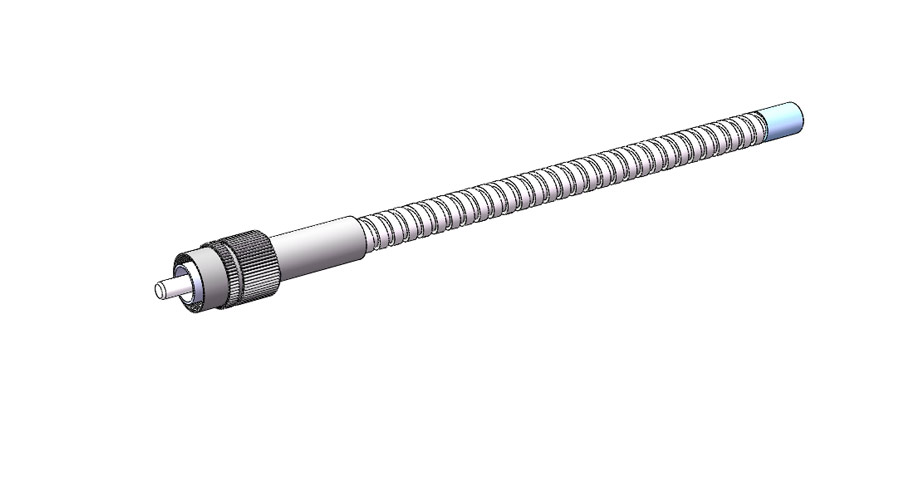
The primary purpose of a fiber collimator is to control and shape light propagation between fiber-based and free-space optical systems.
Convert divergent fiber output into parallel beams
Enable efficient coupling between optical components
Improve alignment accuracy in optical systems
Reduce signal loss and beam distortion
Without collimators, light exiting a fiber would spread rapidly, making it difficult to maintain signal integrity or couple into other optical devices.
The working principle of an optical fiber collimator is based on fundamental optics:
The fiber end is positioned at the focal point of a lens
Diverging light rays from the fiber are captured by the lens
The lens transforms these rays into a parallel beam
This principle ensures minimal divergence over distance, enabling stable optical transmission.
Focal length of the lens
Fiber mode field diameter (MFD)
Numerical aperture (NA)
Alignment precision
Designing a high-performance fiber collimator requires balancing optical precision and mechanical stability.
| Design Parameter | Description | Impact |
|---|---|---|
| Lens Type | GRIN, aspheric, or ball lens | Determines beam quality |
| Working Distance | Distance beam remains collimated | Affects system layout |
| Beam Diameter | Output beam size | Influences coupling efficiency |
| Alignment Tolerance | Precision of assembly | Affects insertion loss |
| Coating | Anti-reflection coatings | Reduces back reflection |
According to industry principles, placing the fiber precisely at or near the lens focal point is essential to achieve optimal collimation and working distance.
Fiber collimators are essential because they act as a bridge between fiber optics and free-space optics.
Beam Control
Prevents excessive divergence and maintains beam integrity.
Efficient Coupling
Enables light transfer between fibers, lenses, detectors, and MEMS devices.
System Integration
Essential for integrating fiber optics into complex photonic systems.
Performance Optimization
Reduces insertion loss and improves signal quality.
In modern optical systems such as wavelength switches and optical cross-connects, collimators are indispensable for precise beam routing and system efficiency.
Fiber collimators are widely used across multiple industries:
Optical switches
WDM systems
Signal routing
Metal cutting
Welding
Drilling
Beam alignment
Calibration systems
High-precision sensing
LIDAR systems
Interferometry
Photonic experiments
They are especially critical in systems where beam quality and alignment directly impact performance.
| Advantage | Description |
|---|---|
| Low Insertion Loss | Maintains signal strength |
| High Return Loss | Minimizes reflection |
| Compact Size | Easy integration |
| High Stability | Reliable long-term performance |
| Wide Wavelength Range | Supports multiple applications |
Fiber collimators are known for their high reliability, compact size, and stable optical performance, making them indispensable in modern photonics.
A fiber collimator converts diverging light from an optical fiber into a parallel beam, enabling efficient transmission, alignment, and coupling in optical systems.
Choose a fiber collimator based on your fiber type, wavelength, beam size, and power requirements, while also considering environmental conditions. For best performance, it’s recommended to work with experienced manufacturers like MEISU for optimized solutions.
No, compatibility depends on fiber type, connector type, and mode field diameter. Using a mismatched collimator can lead to poor beam quality and higher signal loss.
A fiber collimator is a critical optical component that enables precise control of light in fiber-based systems. From telecommunications to high-power laser applications, the role of optical fiber collimators continues to expand as photonics technology advances.
For organizations seeking high-performance and customizable solutions, MEISU offers industry-leading expertise in both standard and high power fiber collimator technologies—helping you achieve superior optical performance and system reliability.
 English
 日本語
日本語 한국어
한국어 français
 Deutsch
 Español
 italiano
 русский
 português
 العربية