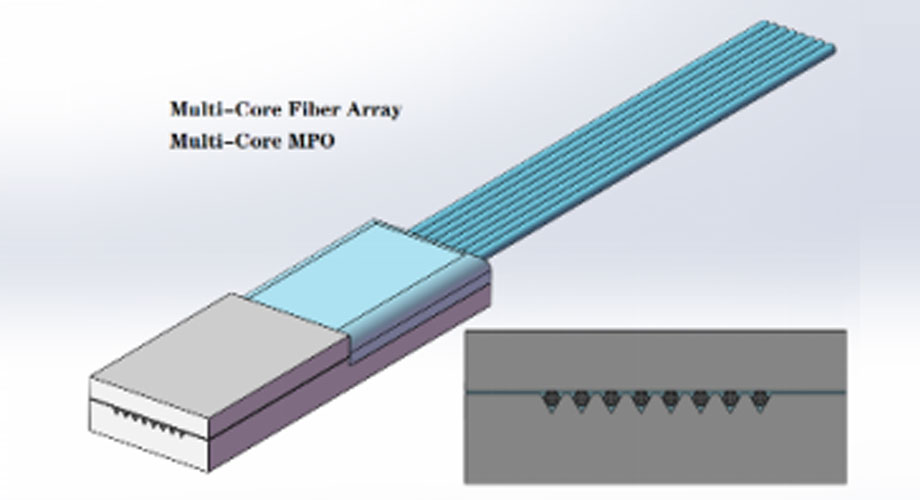
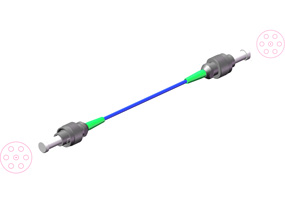
An MPO jumper (Multi-fiber Push On) is a fiber optic jumper cable that integrates multiple fibers into one compact connector system. Unlike traditional single-fiber patch cords, MPO jumpers support high-density transmission by packing multiple cores—typically 8, 12, 16, 24, and even more—into a single connector interface. Meisu offers a PM MPO jumper line that transmits polarization-maintaining signals over multiple cores while preserving the polarization orientation of each channel. When connected, each fiber in the MPO jumper aligns with matching fibers in the mating connector or optical module, enabling simultaneous multi-channel signal transmission through a unified bundle. The compact form factor and multi-core design make the MPO jumper ideal for high-performance dense optical systems.
Using an MPO jumper unlocks several advantages that are essential for modern optical networks. First, MPO jumpers deliver high-density connectivity: multiple fibers in a single connector reduce cabling bulk and simplify panel space usage. Second, MPO jumpers are scalable and efficient; adding more channels or upgrading capacity becomes easier by swapping or extending jumpers rather than reworking entire wiring runs. Third, performance and reliability are strong: Meisu's MPO jumpers are designed with low insertion loss (often <0.35 dB) and high extinction ratio to ensure signal integrity. Fourth, MPO jumpers improve cable management: fewer connectors and cleaner layouts simplify installations, airflow, and maintenance. Finally, they allow faster deployment in densely packed systems, which is especially beneficial in data centers and high-density optical modules.

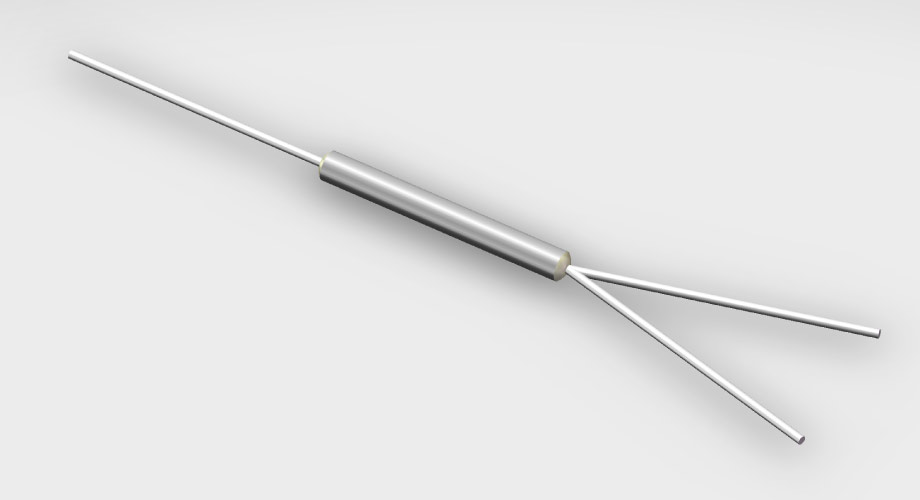
MPO jumpers come in several configurations to meet different demands. One major distinction is between transfer and non-transfer types. Transfer MPO jumpers include ribbon-style or bundled MPO designs and also fan-out versions that branch into single or duplex fibers. Non-transfer MPOs are simpler, straight multi-core jumpers without splitting. Another variation is in core count: while 12-core MPO is common, Meisu MPO jumpers may be offered with 8, 16, or 24 cores. The choice among these types depends on system architecture: when you need high-density fiber interconnects inside modules or patch fields, compact MPO jumpers are ideal. When you need to branch signals out to individual fiber ports or devices, transfer/fan-out MPO jumpers are more suitable.
When using an MPO jumper, quality and specification matter. Meisu's MPO jumper offerings include PM MPO jumpers, which are polarization-maintaining multi-core jumpers able to carry multiple polarized signals with preserved orientation. Meisu also ensures strict performance metrics: insertion loss typically below 0.35 dB and extinction ratio greater than 20 dB. Connector key orientation is customizable, and thread or polish options (UPC, APC) can be selected per application. The company supports high-density designs and custom configurations, making their MPO jumpers compatible with dense optical modules, fiber array systems, and advanced photonic integration. Furthermore, Meisu emphasizes careful end-face processing, connector alignment, and quality testing to reduce errors like guide-hole damage or end-face contamination—common issues in MPO jumper use.

Selecting and deploying the right MPO jumper involves considering system requirements, performance parameters, and handling practices. The insertion loss of MPO jumpers must be kept low (Meisu's PM MPO jumpers typically aim for <0.35 dB) for optimal signal transmission. The jumper's jacket material should match installation environments, e.g., LSZH, PVC, or flame-retardant types. Connector cleanliness and alignment are critical: dust or scratches on MPO ferrules or guide holes can degrade performance dramatically. Always follow proper mating alignment, avoid inserting connectors off-axis, and maintain bend radii to prevent mechanical damage. In high-density optical systems, MPO jumpers enable cleaner fiber panels, faster reconfiguration, and efficient growth. When deployed properly, an MPO jumper becomes a backbone component in high-speed, high-density optical infrastructures.
 English
 日本語
日本語 한국어
한국어 français
 Deutsch
 Español
 italiano
 русский
 português
 العربية