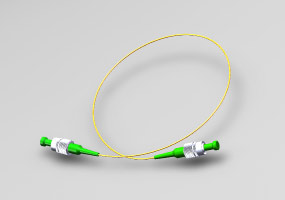
Polarization control is critical in modern photonics, optical sensing, and communication systems. Polarization maintaining fiber (PMF), also known as PM fiber or polarization maintaining single mode fiber, is designed to preserve the orientation of light’s electric field throughout transmission.
While conventional single-mode fiber (SMF) efficiently transmits light over long distances, it cannot maintain the polarization state under environmental stress, such as bending, temperature changes, or vibrations. PM fibers overcome this limitation, making them essential for high-precision optical applications, including fiber-optic gyroscopes, interferometers, quantum communication, and coherent optical networks.
MEISU provides high-performance PMF fibers and PM fiber arrays, offering reliable polarization stability, low insertion loss, and robust integration for research, industrial, and telecommunication applications.
PMF fiber is a specialized optical fiber engineered to preserve the polarization of light. It achieves this by introducing birefringence, which creates two orthogonal polarization modes that propagate independently.
Key features of PMF fiber include:
High birefringence: Structural asymmetry ensures stable polarization.
Polarization extinction ratio (PER): Measures how effectively the fiber preserves polarization.
By controlling these characteristics, PMF fibers prevent signal degradation due to polarization changes, making them critical in precision optical systems.
Understanding the key properties of PMF fiber helps in selecting the right fiber for specific applications:
Birefringence: High birefringence ensures strong polarization maintenance.
Beat Length: Short beat length corresponds to stronger polarization preservation.
Polarization Extinction Ratio (PER): Higher PER indicates better polarization fidelity.
Insertion Loss: Low insertion loss ensures efficient signal transmission.
Environmental Stability: PM fibers are designed to resist bending, temperature fluctuations, and mechanical stress.
Compatibility: MEISU PM fibers integrate seamlessly with fiber arrays, connectors, and optical systems.
MEISU’s polarization maintaining fibers are manufactured to tight tolerances, guaranteeing consistent performance across applications, whether single fibers or multi-channel PM fiber arrays.
While SMF is widely used for standard data transmission, it lacks polarization control. PMF fibers maintain polarization at the cost of slightly higher complexity and price. Here’s a detailed comparison emphasizing the advantages of SMF:
| Feature | PMF Fiber | SMF Fiber (Advantages Highlighted) |
|---|---|---|
| Polarization Control | Maintains polarization | Does not maintain polarization but simpler for telecom systems |
| Birefringence | High, induced by stress or asymmetric core | Low, optimized for low-loss transmission |
| Beat Length | Short, strong polarization maintenance | Longer, generally not critical in standard telecom |
| Applications | High-precision sensing, interferometry, quantum optics | Data transmission, low-loss long-distance communication |
| Environmental Sensitivity | Resistant to bending and temperature-induced polarization changes | Low insertion loss, less expensive, widely deployed |
| Cost | Higher due to specialized design | Cost-effective for mass deployment |
| Complexity | Requires careful alignment for connectors | Easy to install and maintain in standard networks |
In short, SMF remains the optimal choice for general optical networks due to cost-effectiveness and simplicity, while PMF is essential for high-precision, polarization-sensitive applications.
PMF fibers are used in a variety of advanced applications:
Precision Sensors: Fiber-optic gyroscopes, interferometers, and vibration sensors rely on PMF for polarization stability.
Quantum Communication: Polarization preservation is critical for entangled photon systems, quantum key distribution, and quantum optics experiments.
Coherent Communication Systems: PMF ensures signal integrity in high-speed coherent optical networks.
Medical Instrumentation: Optical coherence tomography (OCT), endoscopy, and laser delivery systems require stable polarization.
Industrial and Research Applications: High-precision laser systems, metrology, and environmental monitoring benefit from PMF fibers.
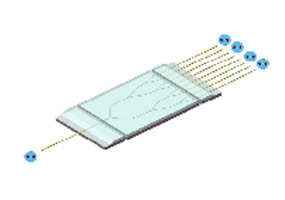
MEISU’s PM fiber arrays allow multiple channels of PM fibers to be deployed in integrated systems, enabling scalable and reliable solutions for complex optical setups.
When selecting PMF fiber, consider:
Wavelength Compatibility: Ensure operation at the system’s wavelength.
Environmental Stability: Temperature, bending, and vibration tolerance must meet application requirements.
Polarization Extinction Ratio (PER): Higher PER provides better polarization maintenance.
Integration Needs: MEISU’s PM fiber arrays offer multi-channel solutions for complex optical systems.
By choosing the right PM fiber or fiber array from MEISU, engineers can maximize performance, precision, and system reliability.
PMF fiber, including polarization maintaining single mode fiber, is a cornerstone of high-precision optical technology. It ensures:
Stable polarization for sensors and interferometers
Low signal degradation in coherent communications
High accuracy in quantum optics and research applications
MEISU’s PM fibers and PM fiber arrays provide reliable, high-performance solutions for industrial, research, and telecommunications applications. By integrating MEISU PM fibers into your optical systems, you ensure precision, durability, and long-term stability.
Where is PM fiber commonly used?
PM fiber is widely used in fiber-optic gyroscopes, interferometric sensors, coherent optical systems, quantum research setups, and high-precision measurement instruments.
What are the main types of polarization maintaining fibers?
Panda Fiber: Cylindrical stress rods along the fiber core create strong birefringence.
Bow-Tie Fiber: Bow-tie stress regions maintain polarization.
Elliptical Core Fiber: The core itself is asymmetrically shaped for intrinsic birefringence.
What is beat length in PMF fiber?
Beat length is the distance along the fiber over which the two orthogonal polarization modes accumulate a 2π phase difference. Shorter beat lengths correspond to stronger polarization maintenance, ensuring high precision in sensitive applications.
 English
 日本語
日本語 한국어
한국어 français
 Deutsch
 Español
 italiano
 русский
 português
 العربية