In a conventional fiber optic system, component size may not seem important until several optical functions have to fit into the same enclosure. Once designers begin working with compact sensing units, navigation modules, photonic packages, or densely populated optical assemblies, every millimeter can affect the overall architecture. This is where a mini PM coupler becomes more than simply a smaller version of a conventional coupler. Its value lies in combining polarization-maintaining performance with a form factor that supports tighter optical integration.
For space-constrained systems, the most suitable coupler is not necessarily the one with the smallest dimensions. Designers also need to consider optical performance, fiber routing, polarization stability, mechanical integration, thermal behavior, and long-term reliability. A compact package is useful only when it continues to meet the requirements of the complete optical path.
Optical systems rarely contain only one passive component. Couplers may need to work alongside fiber arrays, isolators, switches, detectors, circulators, sources, and other components within a limited enclosure. A larger package can force longer fiber routing, increase bending requirements, or consume valuable board and housing space.
The problem becomes more significant when multiple optical channels have to be positioned close together. Physical congestion can make assembly more difficult and may also increase the risk of inconsistent fiber routing between production batches.
A miniaturized package can therefore provide three practical benefits:
More efficient use of internal enclosure space.
Shorter and more organized fiber routing.
Greater flexibility when combining several passive optical components.
However, miniaturization should not be evaluated independently from optical performance. A smaller package has to maintain the characteristics required by the application.
The defining feature of a PM coupler is its ability to preserve the polarization state of light while performing the required coupling function. This becomes important in optical systems where polarization changes can affect measurement accuracy, signal stability, or interference behavior.
A conventional coupler may provide the required splitting ratio but still be unsuitable for a polarization-sensitive application. By comparison, a polarization maintaining coupler is designed around the requirements of polarization-sensitive optical architectures.
The mini format adds another design consideration: packaging efficiency. Instead of treating the coupler as an isolated optical device, engineers can evaluate it as part of a compact photonic assembly.
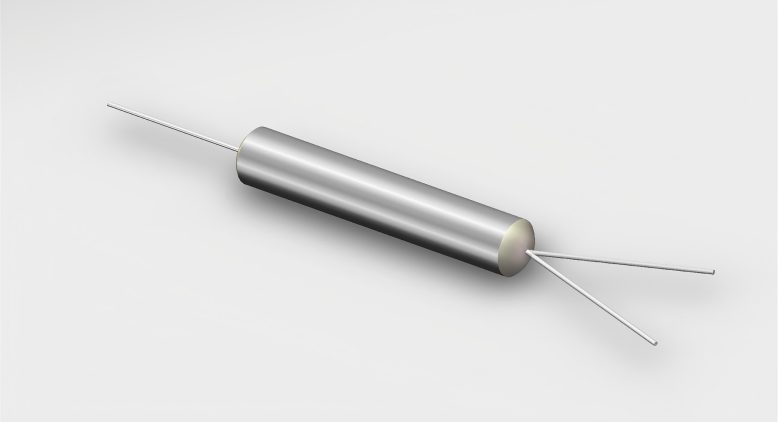
Packaging determines how easily a component can be installed, aligned, routed, protected, and serviced. In compact optical equipment, packaging can sometimes be as important as the nominal optical specifications.
A useful way to evaluate a mini PM coupler is to look at the complete integration path. First, determine where the coupler will be positioned. Then examine how the input and output fibers will be routed. Finally, consider whether nearby components leave sufficient room for assembly and maintenance.
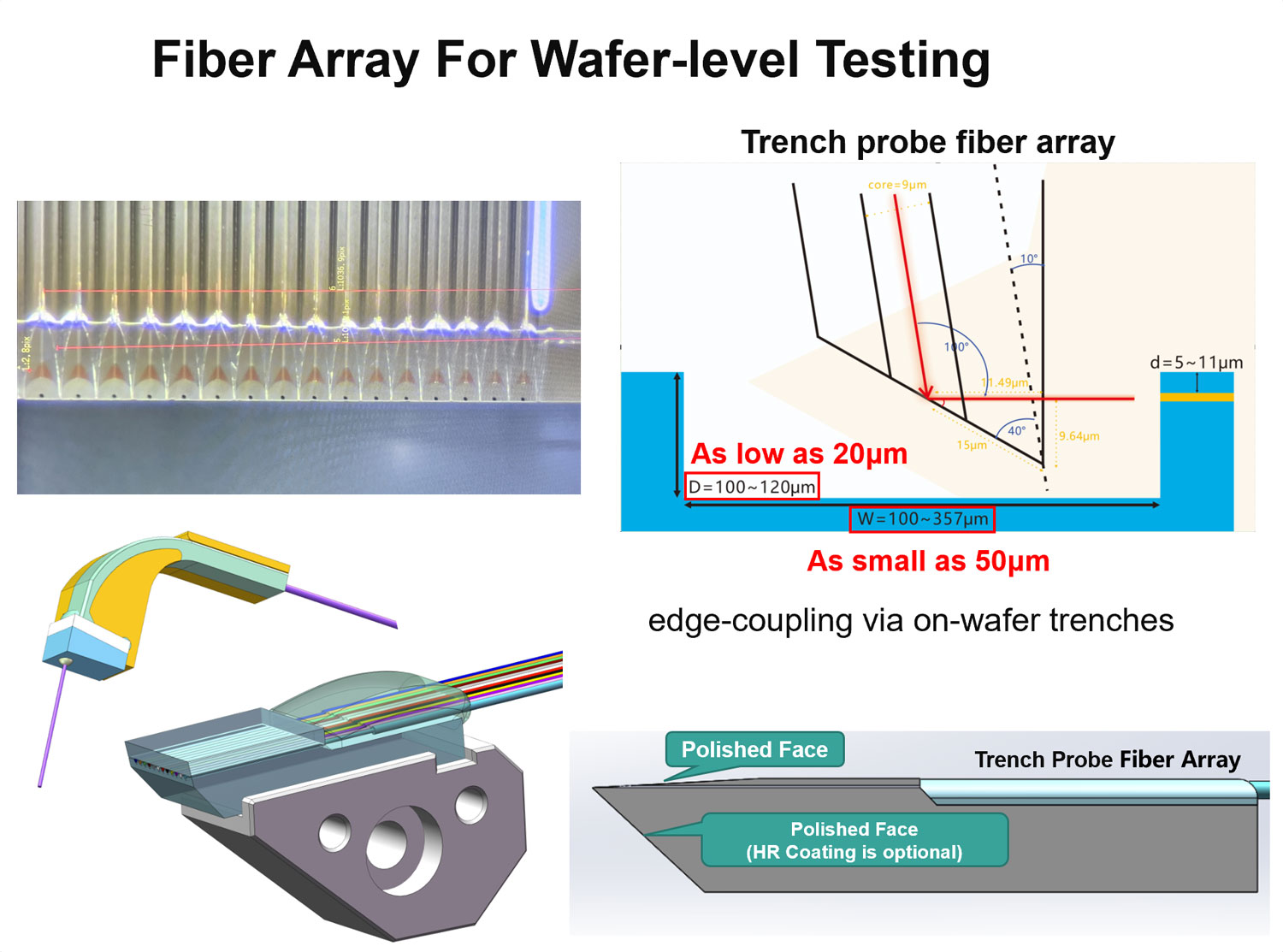
For high-density architectures, the interface between individual couplers and fiber arrays also deserves attention. A well-planned PM fiber array arrangement can simplify channel organization and help designers create more predictable optical layouts.
This is particularly relevant when the optical module contains multiple parallel channels. Rather than treating every fiber as a separate routing problem, array-based integration can turn the optical interface into a more structured assembly.
Not necessarily. Physical size is only one part of integration efficiency.
A very small component may still create problems if its fiber leads require excessive bending space, its optical interface is difficult to align, or its mechanical mounting does not match the rest of the module. Designers should therefore distinguish between component miniaturization and system-level space efficiency.
The latter depends on several factors:
| Design factor | Why it matters |
|---|---|
| Package dimensions | Determines how much physical volume the component occupies. |
| Fiber routing | Affects bending space and the overall layout. |
| Coupling performance | Ensures miniaturization does not compromise the optical budget. |
| Polarization performance | Important for polarization-sensitive applications. |
| Mechanical compatibility | Influences assembly and long-term stability. |
Space limitations do not eliminate the need for polarization control. In fact, tightly integrated systems may make polarization management even more important because the optical path can contain multiple components whose behavior depends on polarization.
In fiber optic gyroscopes, precision sensing systems, coherent optical equipment, and other polarization-sensitive applications, uncontrolled polarization changes can introduce unwanted variations into the optical signal.
Using PM components helps the designer manage this variable from the beginning of the optical architecture. A PM coupler can therefore be evaluated not simply as a splitting device, but as part of a polarization-managed optical path.
Mini PM couplers are particularly attractive when optical density is a primary design constraint. Typical examples include compact sensing modules, fiber optic gyroscope assemblies, aerospace and defense optical equipment, portable instrumentation, and other systems where enclosure volume is limited.
Miniaturization becomes especially valuable when several passive components have to be combined within a single module. Saving space on one component may appear insignificant, but the cumulative effect across an entire assembly can be substantial.
For example, reducing the footprint of a coupler may allow the designer to reposition another optical component closer to the active area. This can shorten the optical path, simplify fiber management, or free space for electrical and mechanical elements.
The selection process should begin with the optical architecture rather than the component catalog. Engineers should define the required splitting ratio, operating wavelength, polarization requirements, allowable insertion loss, return loss expectations, fiber type, and environmental conditions.
Mechanical requirements should then be evaluated alongside the optical parameters. Package dimensions, fiber exit configuration, mounting method, and available routing space can all influence whether a theoretically suitable component is practical in the final assembly.
It is also worth considering future production requirements. A component that works in a prototype may become difficult to assemble consistently when production volume increases. Repeatable alignment, stable packaging, and a clear integration process can therefore be important selection criteria.
A mini PM coupler is valuable because it can address two design challenges at once: maintaining the optical behavior required by a polarization-sensitive system and reducing the physical space required for passive optical integration.
The best choice, however, is not simply the smallest available device. Engineers should evaluate optical specifications, polarization behavior, fiber routing, mechanical integration, environmental stability, and manufacturing requirements together. When those factors are considered as one system, miniaturization becomes a practical engineering advantage rather than a packaging feature on a datasheet.
 English
 日本語
日本語 한국어
한국어 français
 Deutsch
 Español
 italiano
 русский
 português
 العربية