As optical systems continue to increase in channel count and integration density, 2D fiber array assemblies have become a critical enabling technology. Compared with traditional linear fiber array solutions, 2D architectures support significantly higher optical channel density while maintaining exceptional alignment accuracy and insertion loss performance. They are now widely deployed in silicon photonics packaging, Optical Cross Connect (OXC) systems, wavelength selective switches (WSS), biomedical imaging devices, spectroscopy, and high-performance sensing platforms.
The performance of a fiber-optic system depends not only on the optical chip itself but also on the precision of the fiber array alignment process. High-quality fiber optic array assemblies provide repeatable positioning, stable optical coupling, and long-term reliability, making them indispensable for next-generation photonic integration.
The rapid evolution of optical communications has shifted the industry from single-row fiber configurations toward multi-dimensional optical interconnects.
A 2d fiber array extends the concept of a traditional linear fiber array by arranging fibers in both X and Y directions. This configuration dramatically increases channel density without increasing the package footprint.
Compared with conventional arrays, advanced 2D assemblies offer:
Higher optical port density
Precise X-Y fiber positioning
Reduced crosstalk
Lower insertion loss
Better scalability for large optical switches
Improved packaging efficiency for silicon photonics
These advantages make 2D fiber arrays particularly suitable for applications requiring hundreds or even thousands of optical channels.
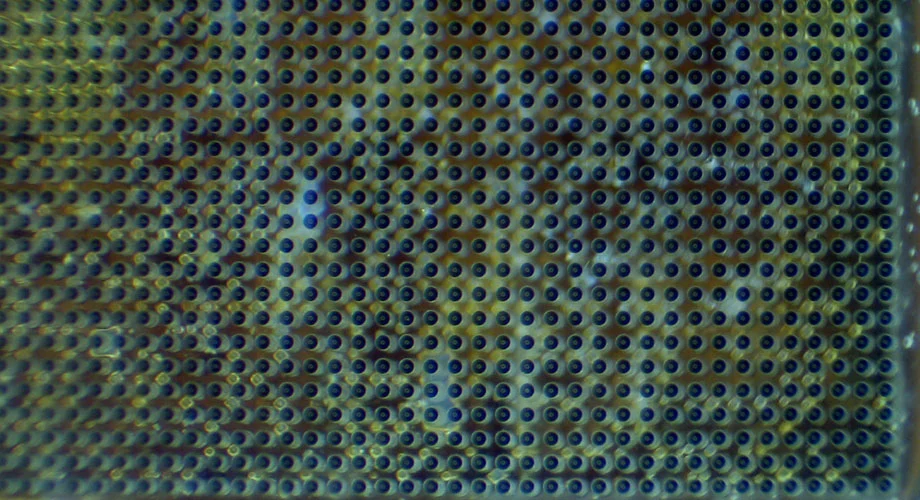
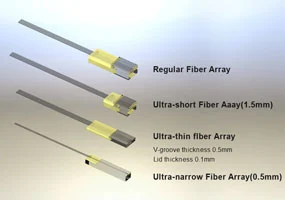
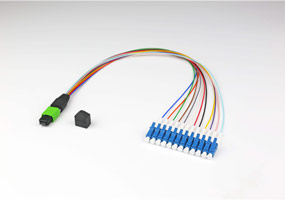
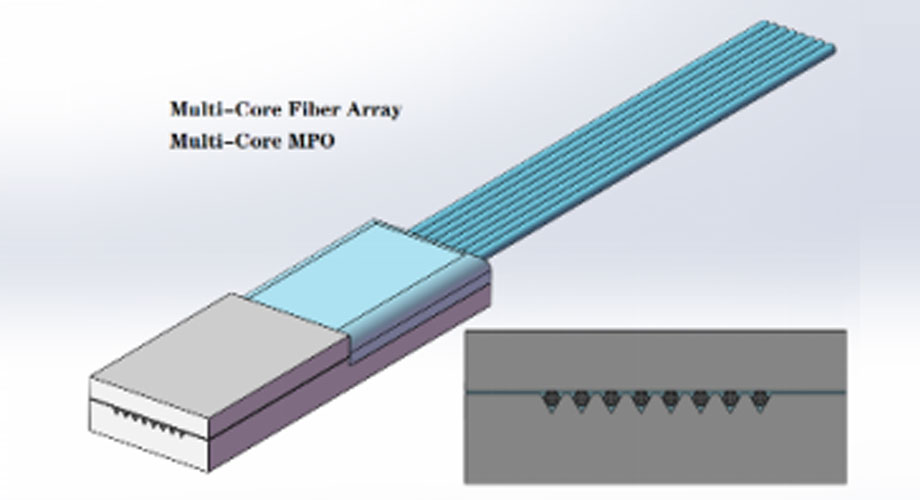
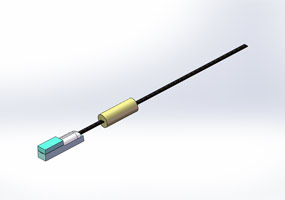
A fiber array is a precisely manufactured assembly that positions multiple optical fibers with micron-level accuracy inside a common substrate.
Depending on the application, the assembly may utilize:
Glass faceplates
Ceramic substrates
Precision-drilled ferrules
Silicon alignment structures
The objective is consistent optical coupling between fibers and photonic devices while minimizing alignment errors.
A high-quality fiber array unit enables:
Stable optical alignment
Excellent repeatability
High coupling efficiency
Reliable mass production
Reduced assembly time
For silicon photonics packaging, even a 1 μm alignment deviation can significantly affect coupling efficiency, making manufacturing precision extremely important.
Fiber array alignment is one of the most critical factors determining insertion loss and overall optical performance.
Modern passive alignment techniques rely on:
Precision V-groove machining
Active optical alignment
High-accuracy drilling equipment
Machine vision inspection
Automated bonding processes
Premium manufacturers routinely achieve fiber pitch tolerances of ±1 μm using glass faceplates and precision positioning systems.
Accurate alignment provides:
Lower coupling loss
Higher production yield
Better wavelength stability
Reduced polarization variation
Improved long-term reliability
These characteristics are especially important for silicon photonics transceivers operating at 400G, 800G, and future 1.6T data rates.
A lensed fiber array incorporates specially processed fiber end faces that focus optical beams directly into photonic devices.
Compared with standard cleaved fibers, lensed fibers provide:
Higher coupling efficiency
Larger alignment tolerance
Reduced insertion loss
Improved optical mode matching
Better compatibility with edge-coupled silicon chips
These advantages are especially valuable when coupling light into miniature silicon waveguides.
Lensed fiber technology is now widely used in:
Silicon photonics
LiDAR
Optical sensors
Integrated photonic circuits
Biomedical imaging systems
Large-scale optical switching platforms require highly parallel free-space optical transmission.
A fiber collimator array converts divergent fiber outputs into parallel optical beams, enabling precise beam steering inside switching equipment.
Likewise, array fiber collimators are essential components in:
Optical Cross Connect (OXC)
ROADM systems
Wavelength Selective Switches (WSS)
Free-space optical switching
High-port-count optical networks
Their performance directly influences switching efficiency, insertion loss, and optical stability across hundreds of channels.
Biomedical imaging systems increasingly require compact optical assemblies capable of transmitting large amounts of optical information simultaneously.
High-density fiber optic array assemblies support applications such as:
Optical coherence tomography (OCT)
Fluorescence imaging
Endoscopic imaging
Confocal microscopy
Spectroscopy
Medical laser delivery systems
Because fibers can be arranged in customized rectangular or circular patterns, engineers can optimize light delivery according to specific imaging requirements.
Not all manufacturers offer the same precision capabilities.
When evaluating a supplier, consider:
Look for fiber pitch tolerances as tight as ±1 μm.
The manufacturer should support:
Custom fiber counts
Arbitrary 2D layouts
Circular patterns
Rectangular arrays
Custom connectors
Protective housings
Depending on performance requirements, choose between:
Glass faceplates
Ceramic faceplates
Quartz substrates
Borosilicate glass
Glass substrates generally provide tighter tolerances for high-volume production, while ceramic options are often more economical for prototype development.
Comprehensive quality inspection should include:
Fiber position measurement
Insertion loss testing
End-face inspection
Interferometric analysis
Environmental reliability testing
As photonic integration continues toward higher bandwidth, greater channel density, and smaller package sizes, advanced 2d fiber array technology has become fundamental to optical system design. Whether deploying a lensed fiber array for efficient chip coupling, integrating a fiber collimator array into large-scale OXC platforms, or implementing a pm fiber array for polarization-sensitive applications, precision manufacturing directly impacts optical performance and production yield.
By combining micron-level fiber array alignment, customizable fiber array unit designs, precision v groove fiber array manufacturing, and scalable array fiber collimators, experienced manufacturers enable reliable, high-density optical interconnect solutions that support the future of silicon photonics, biomedical imaging, and next-generation optical communication.
This version naturally incorporates all requested keywords while emphasizing technical expertise, commercial value, and search-friendly headings aligned with common industry search behavior.
 English
 日本語
日本語 한국어
한국어 français
 Deutsch
 Español
 italiano
 русский
 português
 العربية