Linear fiber arrays have become a critical optical interconnection component because they enable highly accurate, low-loss coupling between optical fibers, photonic chips, and advanced optical modules. By combining precise fiber positioning, customizable channel configurations, and excellent alignment stability, a linear fiber array supports demanding applications such as silicon photonics, optical transceivers, optical switching, LiDAR, and biomedical imaging.
As optical systems continue moving toward higher bandwidth, smaller form factors, and greater integration density, traditional fiber connection methods face limitations in alignment accuracy and scalability. Advanced fiber optic array technologies provide a reliable solution by allowing multiple optical channels to be aligned simultaneously with micron-level precision.
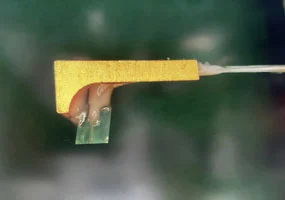
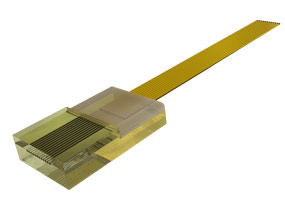
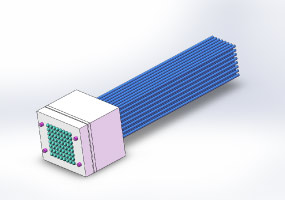
A linear fiber array is a precision optical assembly that arranges multiple optical fibers in a one-dimensional configuration with a defined pitch. The fibers are typically positioned inside a precision-machined substrate, commonly a v groove fiber array structure, where each fiber is fixed and aligned to maintain accurate core spacing.
Unlike individual fiber connections that require separate alignment processes, a fiber array unit enables multiple optical channels to be connected simultaneously. This significantly improves assembly efficiency, optical coupling performance, and system reliability.
A typical linear fiber array consists of:
Precision V-groove substrate
Single-mode (SM), multimode (MM), or polarization-maintaining (PM) fibers
Glass or quartz lid structure
Epoxy fixation system
Precision-polished optical facet
Customized fiber pitch and channel count
The combination of these components creates a stable platform for high-performance optical interconnection.
Linear fiber arrays solve one of the biggest challenges in photonic integration: achieving precise and repeatable optical alignment across multiple channels.
Modern optical systems require:
High-density optical connections
Low insertion loss
Accurate fiber core positioning
Long-term mechanical stability
Compatibility with photonic integrated circuits (PICs)
A high-quality fiber array provides these capabilities by maintaining consistent spacing and positioning between fibers. This is especially important for applications where even a few microns of misalignment can significantly reduce coupling efficiency.
For silicon photonics applications, for example, the transition between standard optical fibers and photonic chips requires extremely accurate fiber array alignment to achieve efficient light coupling.
A v groove fiber array improves optical alignment by using precision-engineered grooves to hold individual fibers in fixed positions.
The V-grooves provide:
Accurate fiber center positioning
Uniform fiber spacing
Stable mechanical support
Reduced alignment variation during assembly
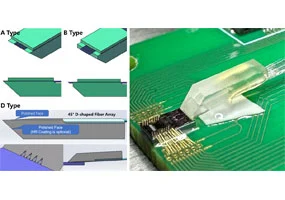
During manufacturing, fibers are placed into the V-groove structure and secured with a protective lid. The fiber array facet is then polished according to application requirements, including angled polishing for specific coupling configurations.
This manufacturing approach allows fiber arrays to achieve high positional accuracy while maintaining low optical loss.
Linear fiber arrays are widely used across advanced photonics industries due to their scalability and precision.
Silicon photonics requires efficient coupling between optical fibers and silicon-based photonic chips. A precisely manufactured fiber array block enables stable optical coupling between external fibers and integrated photonic circuits.
Key requirements include:
Sub-micron alignment accuracy
Low coupling loss
Compatibility with wafer-level testing
High channel density
Linear fiber arrays are becoming an essential interface technology for next-generation optical computing, data centers, and communication networks.
High-speed optical transceivers depend on compact and reliable optical interconnect solutions.
A customized fiber optic array can support:
High-speed data transmission
Multi-channel optical modules
High-temperature processing environments
Silicon photonic integration
By reducing assembly complexity, fiber arrays help optical module manufacturers achieve higher production efficiency and improved reliability.
Large-scale optical networks require scalable switching architectures. Advanced array fiber collimators and fiber collimator array technologies enable efficient beam management in optical switching systems.
These solutions provide:
Multiple optical channel handling
Stable beam alignment
High switching reliability
Scalable port expansion
Fiber array technologies are therefore an important foundation for future all-optical networks.
LiDAR and optical imaging systems require accurate light transmission and collection across multiple channels.
Linear fiber arrays support:
Compact optical packaging
Precise optical positioning
Stable signal transmission
Custom channel configurations
These advantages make them suitable for automotive LiDAR, industrial sensing, and medical imaging applications.
Fiber array alignment is achieved through a combination of precision mechanical positioning and active optical alignment techniques.
The manufacturing process typically includes:
Fiber preparation and inspection
Precise placement inside V-grooves
Active alignment of fiber cores
Fixation with adhesive materials
Fiber facet polishing
Optical performance testing
Active alignment ensures that each fiber core reaches the required position accuracy, minimizing coupling loss between optical components.
For high-performance applications, manufacturers may customize:
Fiber pitch
Fiber type
Number of channels
Substrate material
Polishing angle
Fiber end configuration
As optical communication, artificial intelligence computing, and advanced sensing technologies continue expanding, the demand for compact and high-precision optical interconnection solutions will continue to grow.
Linear fiber arrays provide the accuracy, scalability, and customization required for next-generation photonic systems. From silicon photonics packaging to optical switching networks, advanced fiber optic array solutions will remain a fundamental technology for connecting optical devices with higher performance and reliability.
MEISU’s precision-engineered linear fiber array, v groove fiber array, and customized fiber array unit solutions help customers achieve efficient optical coupling for today's most demanding photonics applications.
 English
 日本語
日本語 한국어
한국어 français
 Deutsch
 Español
 italiano
 русский
 português
 العربية