In today’s rapidly evolving optical communication landscape, fiber optic splitters play a vital role in Passive Optical Networks (PON), widely used in FTTH (Fiber to the Home), data centers, laboratories, and even university research networks. Selecting the right fiber optic splitter type can significantly impact the stability, scalability, and cost-efficiency of your network infrastructure.
A fiber optic splitter is a passive component that divides an optical signal into two or more outputs or combines multiple signals into one. It functions much like a signal distributor in an optical system and is essential for efficiently distributing data in large-scale networks.
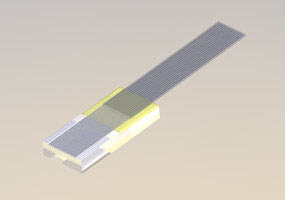
PLC splitter is the most widely used type, utilizing semiconductor-based planar waveguide technology. They offer high precision and are ideal for mass deployment.
Uniform signal distribution
Wide wavelength range (1260–1650 nm)
High stability in harsh environments
FTTH networks
Data center optical distribution
University or lab-scale optical testing
FBT splitters are traditional components made by fusing and tapering optical fibers together. Though gradually being replaced by PLC types, they still have value in specific applications.
Cost-effective
Adjustable splitting ratio
Suitable for small-scale customization
Budget-sensitive network rollouts
Laboratory setups and research environments
Legacy PON systems
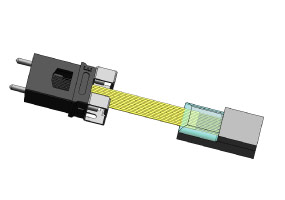
Tree-type splitters combine multiple FBT units to support multi-level splitting, making them ideal for complex network topologies.
Flexible topologies
Can support multiple output levels (up to 1x64 or more)
Modular configuration
Campus networks
Industrial park or smart factory networks
Distributed optical systems
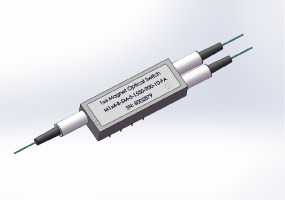
This splitter is a compact version of the PLC splitter, designed for high-density environments with limited space.
Space-saving, plug-and-play design
Factory pre-terminated
Various connector options (SC/APC, LC/UPC, etc.)
Rack or cabinet installation in data centers
FTTH termination boxes or distribution cabinets
Research labs requiring compact setups
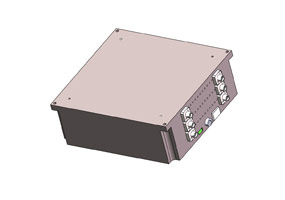
Rack mount splitters are housed in 19” standard enclosures, making them suitable for structured environments like telecom rooms and data centers.
Integrated and manageable
Hot-swappable in modular systems
Supports large-scale signal distribution
Cloud and enterprise data centers
Telecom central offices
National lab optical backbone systems
| Splitter Type | Technology | Key Advantages | Typical Applications |
|---|---|---|---|
| PLC Splitter | Planar Waveguide | Uniform loss, high reliability | FTTH, data centers, laboratories |
| FBT Splitter | Fused Fiber | Low cost, custom ratios | Budget projects, small networks |
| Tree Type Splitter | FBT Combination | Multi-level output, flexible layout | Campus or factory networks |
| Mini Module Splitter | Compact PLC | Space-efficient, pre-installed | Rack systems, test labs |
| Rack Mount Splitter | Rack Enclosure | Organized cabling, scalable | Data centers, telecom hubs |
When designing or expanding a PON or data center optical system, choosing the correct splitter depends on several factors:
Split Ratio Needs – Common configurations include 1x4, 1x8, 1x16, and 1x32.
Installation Space – Use mini modules or rack mounts depending on density requirements.
Environment Compatibility – For high-temp or outdoor areas, choose robust PLC types.
Budget Constraints – FBT splitters are economical for limited-scale deployments.
Future Scalability – Tree-type or rack-mount solutions offer better expansion flexibility.
At MEISU, we specialize in designing and manufacturing a full range of fiber optic splitter types that meet the highest performance standards. Whether you need PLC, FBT, Mini Module, or Rack Mount splitters, our solutions are trusted by factories, laboratories, and universities around the globe.
We offer:
Full customization options
Stable, low-loss signal distribution
Fast lead times and technical support
Ready to find the perfect optical splitter solution for your FTTH or data center project?
Visit www.meisuoptics.com to explore our products or get in touch for tailored recommendations.
 English
 日本語
日本語 한국어
한국어 français
 Deutsch
 Español
 italiano
 русский
 português
 العربية