A reliable fiber optical switch manufacturer provides more than basic optical switching components. Advanced optical networks require switches with low insertion loss, fast response, stable performance, and compatibility with complex photonic systems. MEISU develops customized optical switching solutions for applications including optical communication, OXC, network protection, system monitoring, aerospace, industrial lasers, and optical sensing.
With precise optical alignment technology and expertise in advanced fiber components such as optical fiber collimator, lensed optical fiber, and polarization maintaining optical fiber, MEISU delivers compact and high-performance switching solutions designed for next-generation photonic systems.
A fiber optical switch is an optical device that controls the transmission path of light signals by switching optical connections between different fiber channels. Unlike electronic switches that require optical-electrical-optical conversion, fiber switches directly manage optical signals, improving network efficiency and reducing signal degradation.
Fiber optical switches are essential in modern optical infrastructures because they enable:
Optical path switching
Network protection and restoration
Optical signal monitoring
Automated testing systems
Optical cross-connect (OXC) applications
Dynamic wavelength management
As optical networks continue expanding in bandwidth and complexity, reliable switching technology becomes increasingly important for maintaining high-speed and stable communication.
Low insertion loss is one of the most important performance indicators for optical switches. A high-quality switch achieves low loss through precise optical design, accurate fiber alignment, and optimized coupling structures.
Key factors affecting optical loss include:
Accurate positioning between optical components ensures maximum light transmission efficiency. Advanced alignment processes are especially important when integrating components such as:
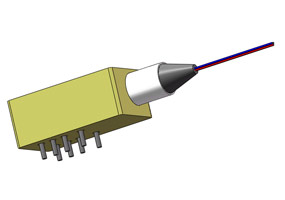
Optical fiber collimator
Optical fiber lens
Lensed optical fiber
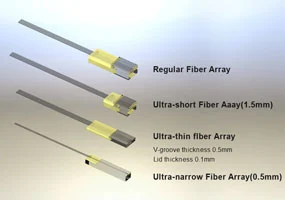
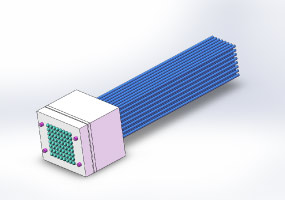
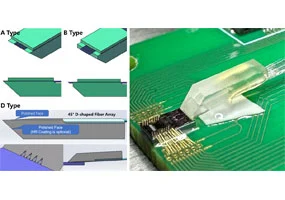
Fiber arrays
Even small alignment errors can cause significant coupling loss, particularly in single-mode applications.
The selection of fiber type also influences switch performance. Depending on application requirements, optical switches may integrate:
Polarization maintaining optical fiber for polarization-sensitive systems
High power optical fiber for laser applications
MFD optical fiber for mode field matching
Multi core optical fiber for advanced communication and sensing systems
By combining suitable fiber technologies with precision switching mechanisms, manufacturers can achieve excellent optical performance.
Different optical switching technologies are designed for specific application requirements.
MEMS optical switches use micro-electromechanical mirrors to control optical paths. They provide:
Compact size
Low insertion loss
High repeatability
Excellent scalability
MEMS switches are widely used in optical cross-connect systems, instrumentation, and fiber sensing networks.
Magneto optical switches operate through magneto-optic effects and provide advantages such as:
Fast switching response
Low driving voltage
Non-mechanical operation
High reliability
They are commonly used in demanding applications including aerospace, defense, and advanced optical systems.
Mechanical optical switches change optical paths by physically moving optical components.
Their advantages include:
Stable optical performance
High reliability
Flexible configurations
Wide wavelength compatibility
Compact designs are especially suitable for optical communication modules with limited installation space.
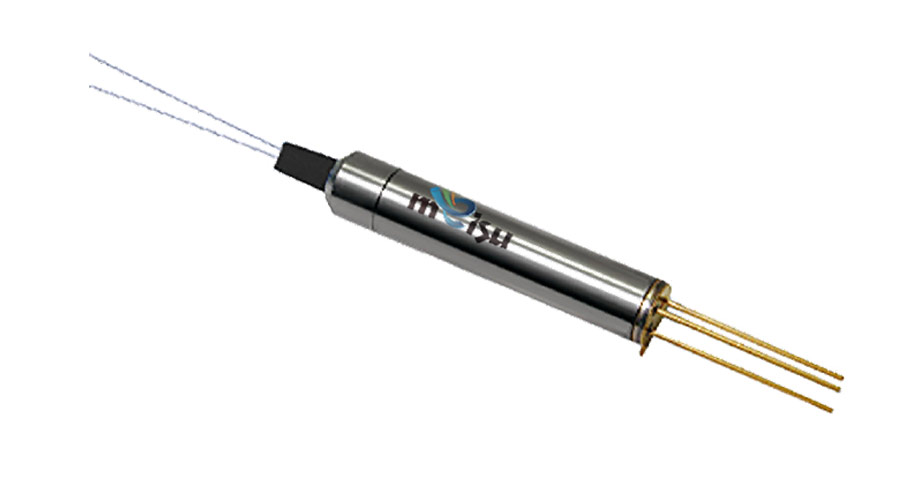
Optical networks require flexible management of increasing data traffic. A fiber optical switch enables intelligent control of optical signal routing without interrupting transmission quality.
Common applications include:
Fiber switches allow automatic backup path switching when failures occur, improving network reliability.
Large-scale optical networks depend on switching systems to dynamically manage optical paths. Fiber optical switches provide the foundation for scalable optical routing architectures.
Optical switches allow engineers to select different optical channels for measurement, diagnosis, and performance monitoring.
Selecting the right manufacturer requires evaluating several technical capabilities:
A professional supplier should provide customized options including:
Channel configurations
Fiber types
Connector designs
Package dimensions
Wavelength requirements
Important specifications include:
Low insertion loss
High return loss
Fast switching speed
Stable repeatability
Long operational lifetime
Reliable manufacturers should have expertise in:
Precision fiber alignment
Optical packaging
Fiber array assembly
Customized photonic components
MEISU combines optical engineering experience with advanced manufacturing technology to deliver fiber switching solutions for demanding industrial applications.
Single-mode fiber optical switches are designed for long-distance and high-bandwidth applications requiring precise optical transmission. Multimode fiber switches are typically used in shorter-distance communication systems and applications requiring larger optical cores.
Yes. Fiber optical switches can be customized according to channel count, fiber type, wavelength range, package size, connector style, and environmental requirements.
Insertion loss depends on optical alignment accuracy, fiber quality, coupling design, switching mechanism, and component manufacturing precision.
Yes. Specialized high-power optical switches can be designed for laser applications by using appropriate optical coatings, fiber types, and thermal management structures.
As optical communication systems evolve toward higher bandwidth, greater integration, and intelligent network management, advanced fiber optical switch technology will continue playing a critical role.
By combining precision alignment, advanced fiber technologies, and customized optical designs, MEISU provides low-loss switching solutions for optical communication, sensing, laser systems, and next-generation photonic applications.
From optical fiber array assemblies to advanced lensed optical fiber and optical switching modules, MEISU helps customers achieve reliable and efficient optical connectivity for the future of photonics.
 English
 日本語
日本語 한국어
한국어 français
 Deutsch
 Español
 italiano
 русский
 português
 العربية