PM fiber is designed to preserve the polarization state of transmitted light, while standard fiber allows polarization changes caused by environmental factors and fiber imperfections. In applications where signal stability, phase accuracy, and coherent performance are critical, polarization maintaining technology provides significant advantages. This makes pm fiber, pm fiber assemblies, and precision optical components essential for aerospace, fiber sensing, coherent communication, silicon photonics, and advanced optical systems.
Unlike conventional single-mode fiber, polarization maintaining fiber uses internal stress structures to create birefringence, forcing light to maintain a stable polarization direction during transmission. This enables higher extinction ratio (ER), improved signal integrity, and more reliable optical performance.
For engineers selecting optical components, understanding the difference between standard fiber and PM fiber is essential for choosing the right solution for demanding photonic applications.
The main difference between pm fiber and standard optical fiber is polarization control.
Standard single-mode fiber (SMF) is optimized for general optical transmission but cannot maintain a fixed polarization state. External influences such as temperature changes, vibration, bending, and mechanical stress can alter the polarization of transmitted light.
In contrast, polarization maintaining fiber contains stress-applying parts (SAPs) inside the fiber structure. These create a stable birefringence effect that maintains the input polarization state over the transmission distance.
| Feature | PM Fiber | Standard Fiber |
|---|---|---|
| Polarization control | Maintains polarization state | Polarization changes over distance |
| Signal stability | High stability for coherent systems | Sensitive to environmental effects |
| Extinction ratio | High ER performance | Limited polarization preservation |
| Applications | Fiber sensors, lasers, coherent communication | General data transmission |
| Alignment requirement | High precision alignment needed | Lower alignment requirements |
For systems using interferometry, optical gyroscopes, and coherent detection, PM technology provides the reliability required for accurate operation.
Polarization maintaining fiber is important because many advanced optical systems rely on precise polarization control.
In coherent communication systems, unwanted polarization changes can reduce signal quality and increase noise. In sensing applications, polarization instability can introduce measurement errors and reduce system accuracy.
Key advantages of pmf fiber include:
Stable polarization transmission
Improved coherent signal-to-noise ratio
Reduced polarization-related losses
Better system repeatability
Enhanced environmental reliability
These advantages make PM technology widely used in:
Fiber optic gyroscopes (FOG)
Aerospace navigation systems
Optical fiber sensing
Fiber lasers
Silicon photonics
High-speed optical communication
PM fiber works by introducing controlled birefringence into the fiber structure. The internal stress elements create two different refractive indexes for two polarization axes.
When light enters the correct polarization axis, the fiber maintains the polarization state during transmission.
The two main polarization axes are:
Slow axis: The preferred transmission axis for polarized light
Fast axis: The secondary polarization axis with different propagation characteristics
Accurate pm fiber alignment is critical because light must be coupled into the correct axis to achieve maximum polarization extinction ratio.
The choice depends on the optical system requirements.
Standard fiber is suitable for applications where polarization variation does not affect system performance, such as conventional communication links.
PM fiber is preferred when polarization accuracy directly impacts system performance.
Applications requiring PM fiber include:
Fiber gyroscopes depend on stable polarization characteristics to accurately measure rotation. PM components reduce polarization errors and improve navigation reliability.
Coherent receivers require controlled polarization states to achieve high-speed signal processing and improved transmission quality.
PM components help maintain laser polarization output, improving beam stability and system efficiency.
Measurement systems require consistent polarization performance for accurate characterization.
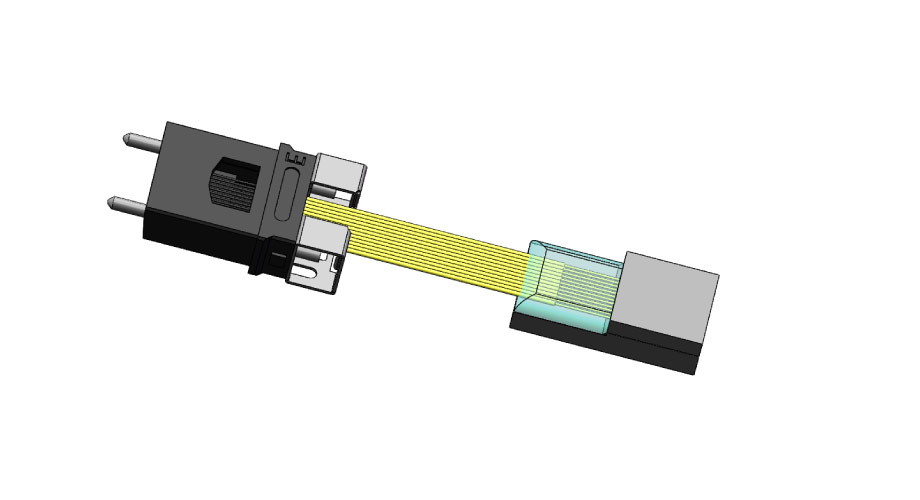
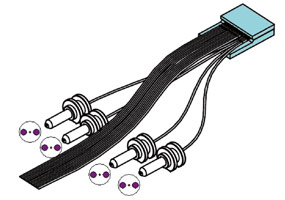
PM fiber components are designed to maintain polarization performance throughout an optical system. These components include pm patch cord, pm fiber splitter, pm fiber array, and pm fiber coupler.
A complete PM optical solution typically includes:
PM fiber
PM connectors
PM patch cords
PM couplers
PM splitters
PM PLC devices
Custom PM fiber assemblies
These components ensure stable optical transmission from input coupling to final signal processing.
Selecting the correct PM components requires evaluating several technical parameters.
Higher ER indicates better polarization preservation performance.
Low insertion loss improves overall system efficiency.
PM components must match the required wavelength range, such as 1310 nm, 1550 nm, or specialized laser wavelengths.
Different applications may require different PM fiber structures, including Panda fiber or bow-tie fiber designs.
A reliable pm fiber connector and pm connector require precise axis alignment to avoid polarization degradation.
PM fiber alignment is one of the most critical manufacturing processes for polarization maintaining devices.
Incorrect alignment between the optical axis and fiber stress rods can significantly reduce extinction ratio and system performance.
Precision alignment involves:
Identifying slow and fast axes
Rotational alignment of fiber cores
Accurate coupling positioning
Stable packaging processes
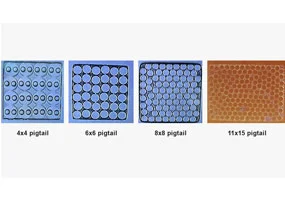
For multi-channel components such as PM fiber arrays, alignment accuracy directly determines device reliability.
As optical systems continue moving toward higher speed, greater integration, and improved measurement accuracy, PM technology is becoming increasingly important.
Advanced solutions such as:
pm fiber assemblies
pm fiber array
pm patch cord
pm plc
pm fiber splitter
pm fiber coupler
provide the polarization control required for modern photonic systems.
MEISU specializes in customized polarization maintaining optical solutions, offering precision manufacturing capabilities for PM fiber components used in communication, sensing, laser, and photonics applications.
PM fiber is not universally better than standard fiber; it is designed for applications requiring polarization stability. For general optical transmission, standard fiber is usually sufficient. For coherent communication, sensing, and laser applications, PM fiber provides superior performance.
PM stands for Polarization Maintaining. PM fiber is designed to maintain the polarization state of transmitted light by using controlled birefringence inside the fiber structure.
A PM patch cord connects polarization maintaining optical components while preserving polarization alignment and minimizing polarization-related losses.
PM fiber alignment ensures that the optical signal enters the correct polarization axis, maximizing extinction ratio and maintaining system accuracy.
PM fiber components are widely used in aerospace, navigation, fiber sensing, optical communication, silicon photonics, and fiber laser systems.
The difference between PM fiber and standard fiber becomes critical when optical systems require precise polarization control. While standard fiber supports general transmission needs, pm fiber technology enables stable, high-performance operation in advanced photonic applications.
With precision components including pm fiber array, pm patch cord, pm fiber splitter, pm coupler, pm connector, and pm fiber assemblies, engineers can achieve higher signal reliability, improved optical performance, and greater system integration flexibility.
 English
 日本語
日本語 한국어
한국어 français
 Deutsch
 Español
 italiano
 русский
 português
 العربية