Choosing a fiber optical switch is rarely just a matter of selecting the number of ports. In a real optical system, the switch has to fit the routing architecture, signal type, switching requirements, available space, control interface, and reliability target. A specification that works well for an optical test platform may be unnecessarily complex for a monitoring module, while a compact switch designed for a small system may not provide enough channels for a larger optical network.
The specification process should therefore begin with the function the switch must perform. Once that is clear, engineers can work backward to determine the required configuration and technology.
The first question is simple: what does the switch need to accomplish?
Some systems use optical switches to select between redundant signal paths. Others use them for monitoring, automated testing, channel routing, protection, or reconfiguration. The same basic switching principle can support very different system functions.
For example, a protection architecture may require rapid selection between a primary and backup optical path. A test platform may need a larger number of channels that can be connected to measurement equipment in different sequences.
Defining the function first prevents engineers from over-specifying the switch based on a generic product category.
Port configuration is one of the most visible specifications, but it should be derived from the optical architecture rather than selected independently.
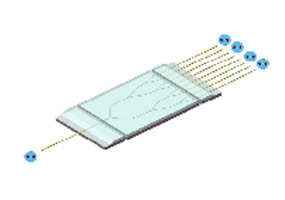
Common configurations include 1×2 and 2×2 arrangements, while higher-density systems may require 1×4, 1×8, 1×12, or larger configurations. The required channel count depends on how many optical paths must be selected, monitored, or interconnected.
A smaller configuration can reduce complexity and cost, while a higher-port-count architecture can simplify a system that otherwise requires multiple switches.
The important point is to determine whether the switch is replacing several independent routing functions or performing one simple path-selection task.
Yes. Single-mode and multimode systems have different optical characteristics, and the switch must be compatible with the fiber architecture.
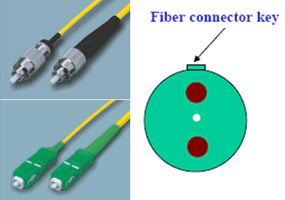
Engineers should confirm the required fiber mode before comparing products. This becomes particularly important when a switch is being added to an existing optical network where the surrounding components have already been standardized.
The choice between single-mode and multimode should therefore be treated as a system requirement rather than an optional product feature.
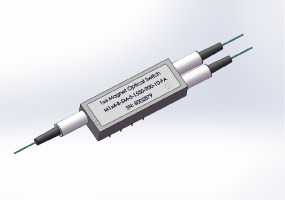
There is no single switching technology that is optimal for every application. Mechanical, MEMS, magneto-optic, and other architectures can offer different combinations of switching speed, optical performance, footprint, control requirements, and durability.
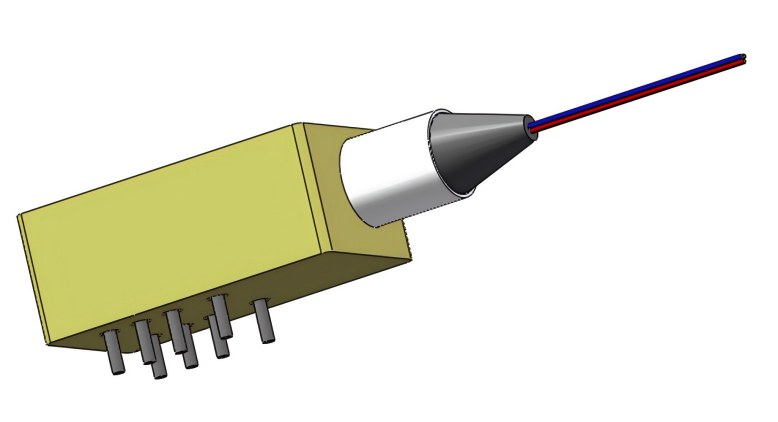
A micro optical switch, for instance, may be attractive when installation space is limited. A different architecture may be more appropriate when channel count, switching behavior, or environmental requirements dominate the design.
Engineers should therefore avoid choosing a technology solely because it is commonly used. The correct approach is to compare technology characteristics against application requirements.
A meaningful switch specification should include more than switching time. The optical performance of the device directly affects the system in which it is installed.
| Parameter | Why it matters |
|---|---|
| Insertion loss | Determines the amount of optical power lost through the switch. |
| Return loss | Indicates the level of reflected optical power. |
| Isolation | Helps prevent unwanted optical leakage between paths. |
| Switching time | Determines how quickly the optical path can be changed. |
| Repeatability | Important when the same optical state must be selected repeatedly. |
| Durability | Relevant to systems with frequent switching cycles. |
The required limits should be established according to the application. There is little value in demanding an extremely aggressive specification if the rest of the optical architecture does not benefit from it.
Technology selection becomes more meaningful when engineers understand why a particular architecture is being considered.
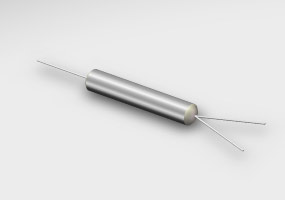
A magneto optical switch uses magneto-optic effects to control the optical path. This distinguishes it from mechanical switching approaches and gives designers another option when evaluating switching behavior and system architecture.
The key is to compare the technology with the application's actual requirements. Switching frequency, environmental conditions, optical performance, package constraints, and control requirements should all be considered before a technology is selected.
Physical dimensions can become a decisive factor in densely packaged optical equipment. A switch that performs well electrically and optically may still be difficult to use if its package consumes too much internal volume.
Compact packaging is especially useful in equipment where optical, electronic, and mechanical subsystems compete for the same enclosure space. In such cases, the switch should be evaluated together with fiber routing and connector access.
Designers should also consider the space required around the component. The nominal package size does not always represent the total installation footprint. Fiber bending, mounting hardware, and assembly clearance can all increase the actual space requirement.
Optical switch performance is only one part of a procurement decision. For custom or high-volume applications, the manufacturer's engineering capability can have a direct effect on project success.
When comparing fiber optic switches manufacturers, buyers should consider whether the supplier can support the required configuration, fiber type, switching technology, package dimensions, control method, and environmental specifications.
Consistency is particularly important when optical switches are used in production equipment. A supplier should be able to provide repeatable performance across production batches rather than only a satisfactory prototype.
A detailed technical request should include the basic optical architecture and the operating conditions. At minimum, buyers should define:
Required switch configuration.
Single-mode or multimode fiber.
Operating wavelength.
Required insertion loss and return loss.
Isolation requirement.
Switching speed.
Expected switching cycles.
Operating and storage temperature.
Package and installation limitations.
Electrical control requirements.
Providing these details at the beginning reduces unnecessary back-and-forth and makes supplier quotations easier to compare.
A fiber optical switch should be specified as part of an optical system rather than as an isolated component. Port count, fiber mode, switching technology, optical loss, switching speed, physical dimensions, and reliability all influence the final result.
The most effective specification process starts with the optical function, translates that function into measurable requirements, and then compares available switch architectures against those requirements. This approach helps prevent both over-specification and costly compromises during integration.
 English
 日本語
日本語 한국어
한국어 français
 Deutsch
 Español
 italiano
 русский
 português
 العربية