In modern fiber optic networks, speed, reliability, and precision are critical. A single mode switch plays a central role in enabling efficient signal routing in high-performance optical systems. Whether you are designing telecommunications infrastructure, data centers, or advanced sensing networks, understanding how a fiber optical switch works—and how to choose the right one—can significantly impact your network performance.
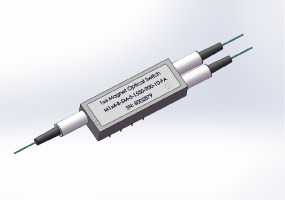
A single mode switch is a type of fiber optic switch designed to route optical signals within single mode fiber (SMF) networks. Unlike multimode systems, single mode fibers allow light to travel in a single path, enabling long-distance transmission with minimal signal loss.
Supports narrow core fibers (~9 µm diameter)
Optimized for long-distance communication
High precision signal routing
Low insertion loss and back reflection
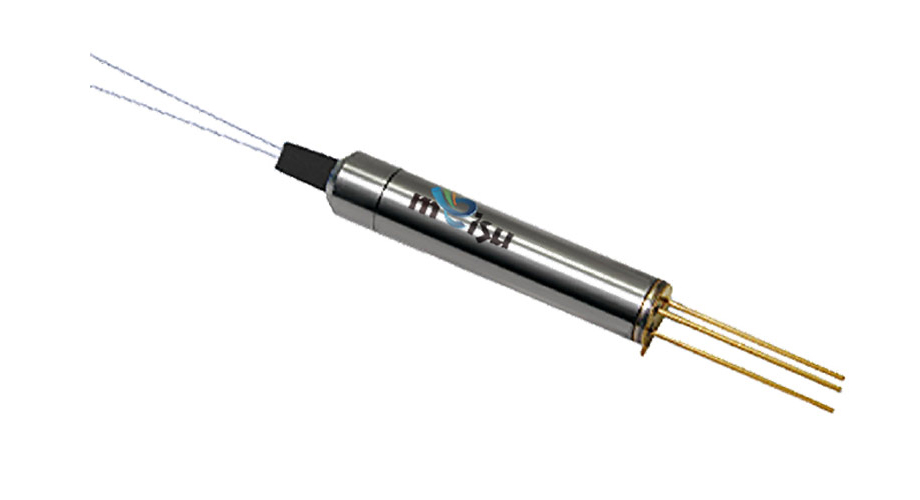
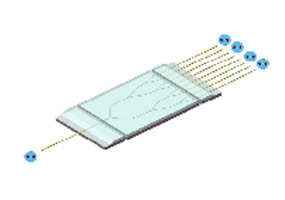
A single mode fiber optic switch works by directing optical signals from one input port to one or multiple output ports without converting the signal into electrical form.
Light enters through an input fiber
Internal switching mechanism redirects the light path
Signal exits through selected output fiber(s)
(Conceptually, switching behavior can be modeled as a mapping function between input and output ports.)
Mechanical Switching – Uses moving parts (mirrors/prisms)
MEMS (Micro-Electro-Mechanical Systems) – High precision micro-mirrors
Optical Switching (Solid-State) – Faster, no moving parts
Single mode switches are engineered for high-performance environments. Below are their defining features:
| Feature | Description | Importance |
|---|---|---|
| Low Insertion Loss | Minimal signal attenuation | Ensures signal integrity |
| High Return Loss | Reduces back reflection | Improves transmission quality |
| Fast Switching Time | Milliseconds or microseconds | Critical for dynamic networks |
| High Channel Isolation | Prevents signal crosstalk | Enhances accuracy |
| Compact Design | Space-saving form factor | Ideal for dense installations |
Using a fiber optical switch in single mode networks provides several advantages:
Single mode systems can transmit data over tens to hundreds of kilometers without repeaters.
Supports modern high-speed communication protocols (5G, cloud, AI infrastructure).
Ensures stable and reliable performance in mission-critical environments.
Easily integrates into expanding fiber networks.
Many switches support software-defined networking (SDN).
Single mode switches are widely used across industries:
Optical signal routing in backbone networks
Wavelength division multiplexing (WDM)
Dynamic fiber routing
Redundancy and failover systems
Automated optical testing setups
Secure, high-reliability communication systems
Fiber optic sensing networks (temperature, pressure)
Selecting the right single mode fiber optic switch requires careful evaluation:
Lower values indicate better performance.
Depends on application (real-time vs static routing).
Common types:
1x2
1x4
2x2
Mechanical switches may wear out; MEMS offer longer life.
Manual
USB
Ethernet / SNMP
Temperature range, vibration resistance, etc.
When evaluating fiber optic switches manufacturers, it is essential to choose a trusted and experienced brand like MEISU, known for delivering high-quality, precision-engineered optical switching solutions tailored to industrial and telecom applications.
A single mode switch is designed for long-distance transmission with minimal signal loss, while a multimode switch is used for shorter distances with higher modal dispersion. The choice depends on network scale and performance requirements.
Yes, single mode switches are well-suited for high-speed networks because they support long-distance, low-latency transmission. They are commonly used in 5G backhaul and core network infrastructure.
In most cases, a single mode switch is optimized specifically for single mode fibers and may not perform efficiently with multimode fibers. Using mismatched components can lead to signal loss and reduced network performance.
A single mode switch is a cornerstone of modern fiber optic infrastructure, enabling efficient, scalable, and high-speed optical signal management. By understanding its features, functionality, and selection criteria, businesses can optimize their network performance and future-proof their systems.
For organizations seeking reliable solutions, partnering with trusted fiber optic switches manufacturers like MEISU ensures access to cutting-edge technology and expert support.
 English
 日本語
日本語 한국어
한국어 français
 Deutsch
 Español
 italiano
 русский
 português
 العربية